Insights on Mental Health Education

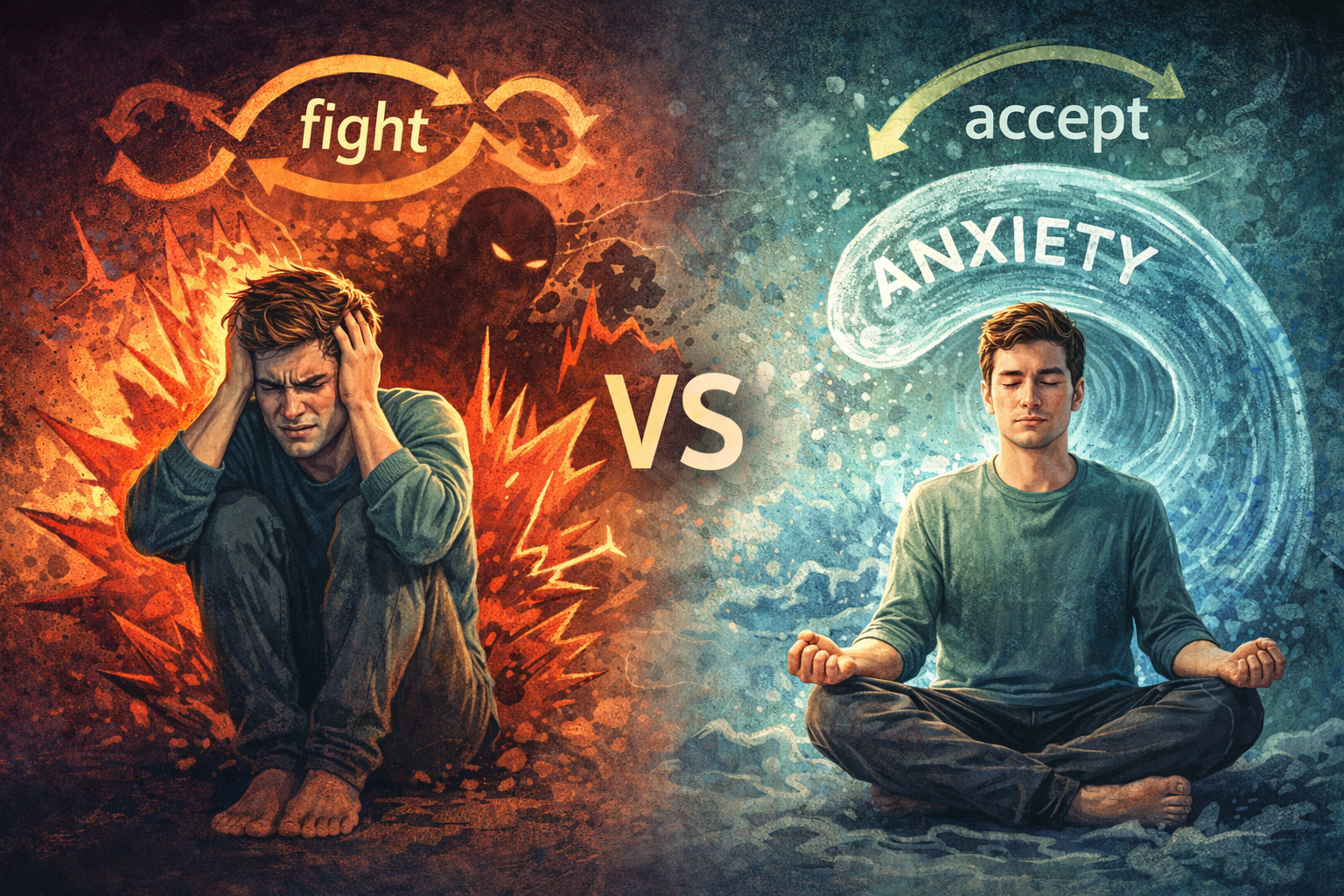
Healing from Anxiety Begins When You Stop Searching for Solutions

Recovery from anxiety does not come from finding better explanations, smarter coping strategies, or perfect mental closure. It begins when the brain learns that uncertainty, imperfection, and unfinished thoughts are not threats. This article explains, using modern CBT science, why the search for solutions often maintains anxiety, and how real psychological strength develops when that search stops.

Healing from Anxiety Begins When You Stop Searching for Solutions Read Post »

Acknowledge – Hug – Forgive (AHF): A Simple Framework for Inner Child Healing Explained Through Psychology

Many people dismiss “inner child” work as unscientific, yet in psychology it points to something real: early emotional patterns shape how we interpret situations and experience anxiety later in life. The Acknowledge – Hug – Forgive (AHF) framework is not a formal technique, but a simple way to describe three research-backed processes, emotional awareness, emotional safety, and cognitive reappraisal, that help explain why unresolved emotional learning continues to drive anxiety and emotional reactivity.

Acknowledge – Hug – Forgive (AHF): A Simple Framework for Inner Child Healing Explained Through Psychology Read Post »

Why You Don’t Need to “Succeed” Socially to Recover from Anxiety

Recovery from social anxiety does not require confidence, flawless performance, or social success. It requires learning to stop fixing what did not harm you, allowing imperfection, and leaving social experiences without mental replay. This article explains, using CBT and neuroscience, why healing happens when you drop the need to “do well,” not when you master it.

Why You Don’t Need to “Succeed” Socially to Recover from Anxiety Read Post »

Why the More You Try to Be Better, the More Anxious You Become (Here’s Why)

Trying to be “better” after social situations might feel like self-improvement, but for anxious minds, it often backfires. This article explains why post-event rumination, mental correction, and perfectionism maintain anxiety, and why learning to tolerate imperfection and let go of mental closure leads to real psychological resilience.

Why the More You Try to Be Better, the More Anxious You Become (Here’s Why) Read Post »

The Unseen Divide: Avoidance vs. Tolerance of Uncertainty in Social Anxiety, A Cognitive and Neurolearning Analysis

Not looking back when you hear laughter is often called avoidance—but that’s not always true. The same behavior can either reinforce social anxiety or weaken it, depending on what happens internally. This article explains why fear-driven non-checking strengthens threat learning, while indifference to ambiguity allows anxiety to fade. Same action. Opposite outcomes.

The Unseen Divide: Avoidance vs. Tolerance of Uncertainty in Social Anxiety, A Cognitive and Neurolearning Analysis Read Post »

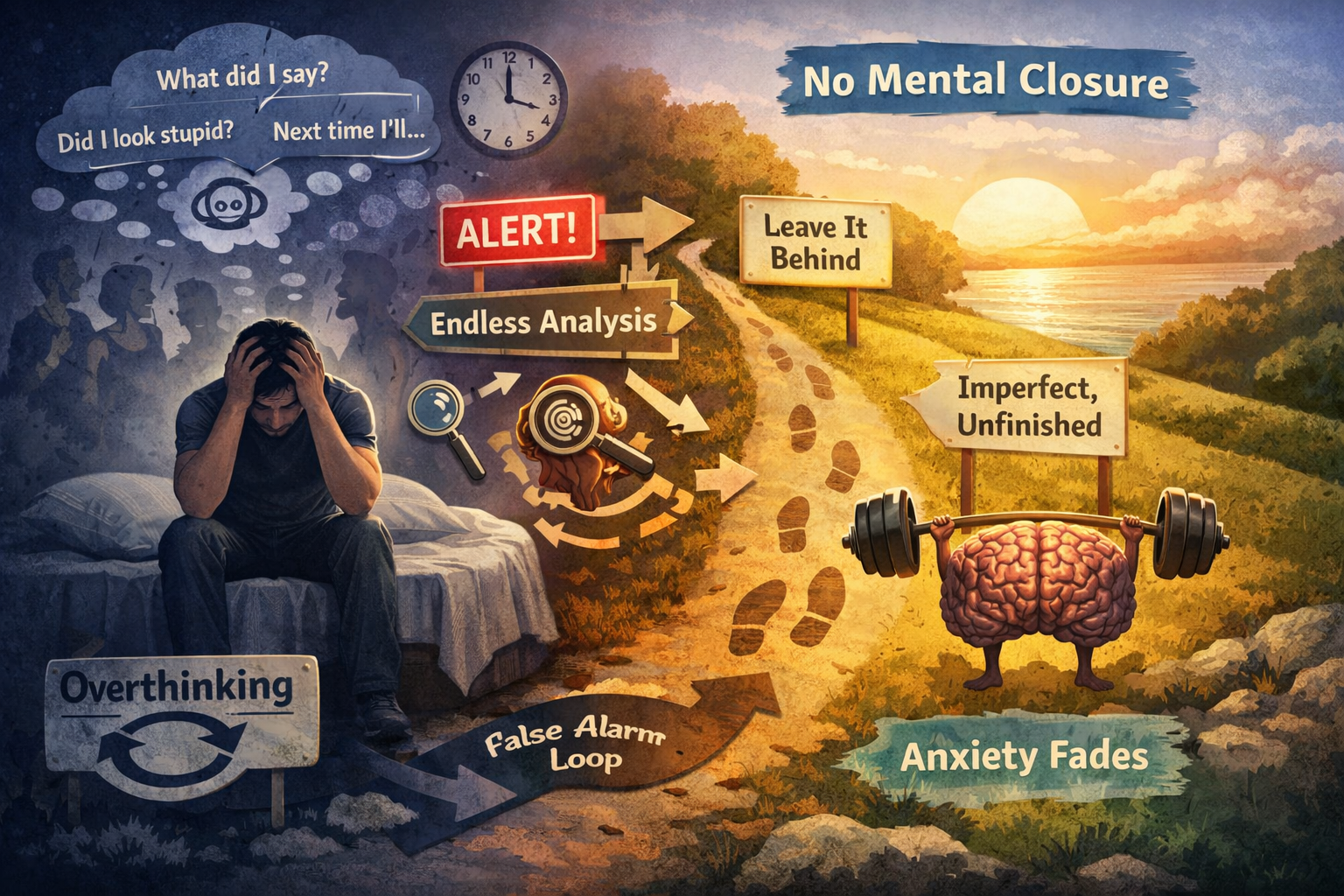
Why Ignoring What Happened Makes You Less Anxious and More Psychologically Stable

Psychological strength in anxiety is not built by analyzing social situations after they end. It is built by leaving them unfinished in your mind. This article explains why ignoring what happened—when nothing truly went wrong—reduces post-event rumination, weakens anxiety circuits, and creates real emotional stability.

Why Ignoring What Happened Makes You Less Anxious and More Psychologically Stable Read Post »

Shopping Cart
Scroll to Top