Anxiety Science

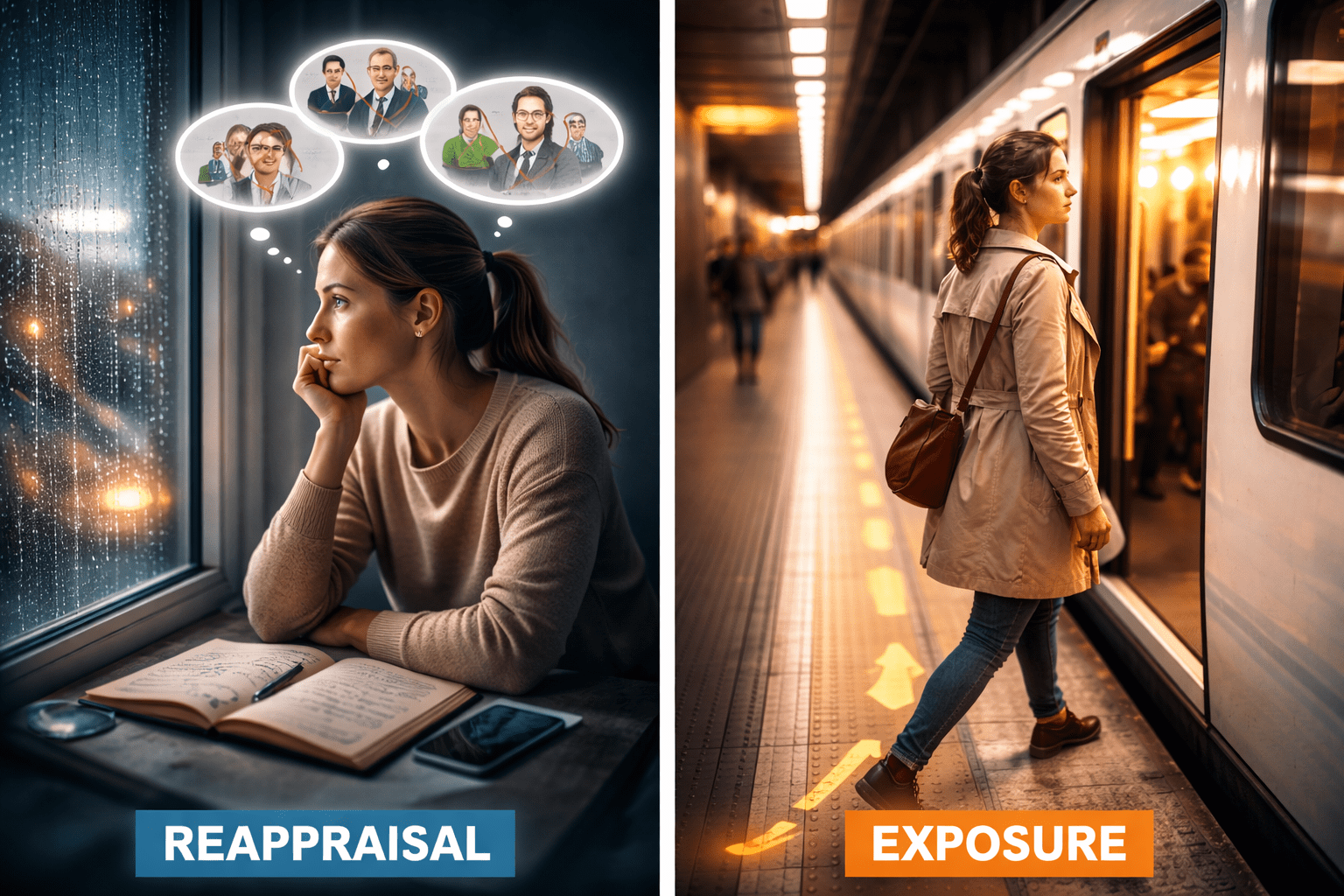
Reappraisal Lowers Prediction. Exposure Updates Fear: Why CBT Needs Both.

Anxiety is driven by exaggerated threat prediction, the mind overestimates danger and underestimates coping ability. Cognitive reappraisal lowers these predictions, reducing distress at the level of interpretation. However, only exposure creates prediction error strong enough to update conditioned fear learning. Symptom relief and fear restructuring are related, but not the same process.

Reappraisal Lowers Prediction. Exposure Updates Fear: Why CBT Needs Both. Read Post »

Real Event ≠ Magnified Significance: Why Anxiety Inflates Meaning

Anxiety does not exaggerate events, it exaggerates their meaning. A neutral cue can be encoded as threat, not because it is dangerous, but because the nervous system has learned to treat it as significant. Recovery is less about eliminating emotion and more about reducing magnified meaning and shortening the time it takes to settle and move forward.

Real Event ≠ Magnified Significance: Why Anxiety Inflates Meaning Read Post »

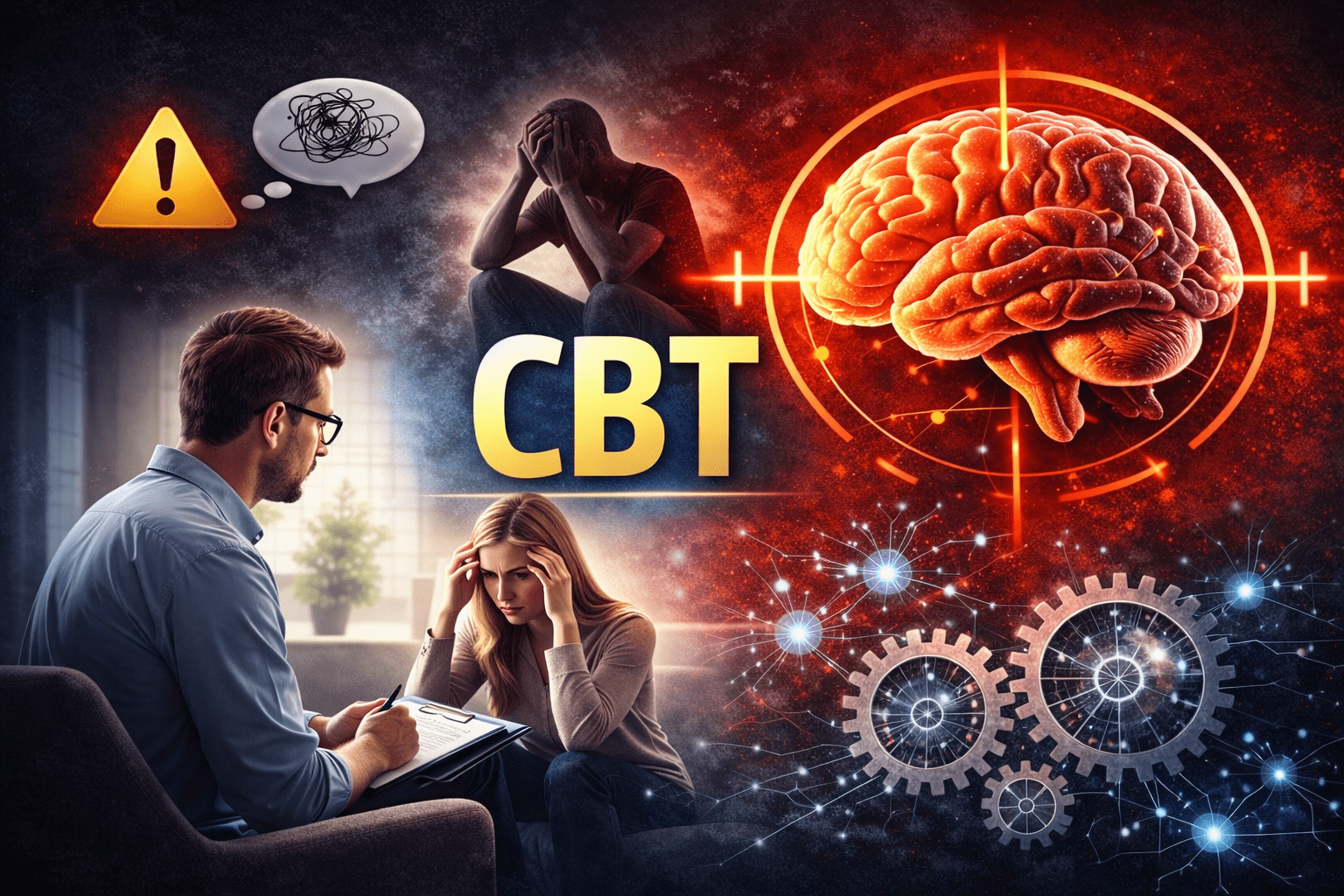
Why Cognitive Behavioral Therapy (CBT) Is the Most Effective, Evidence-Based Treatment for Anxiety Disorders

Anxiety disorders don’t persist because people lack confidence or positivity. They persist because the brain has learned to misinterpret threat and reinforce avoidance. Cognitive Behavioral Therapy works because it directly corrects these threat interpretations and retrains the nervous system through evidence, exposure, and cognitive reappraisal, producing change that lasts.

Why Cognitive Behavioral Therapy (CBT) Is the Most Effective, Evidence-Based Treatment for Anxiety Disorders Read Post »

Is Anxiety and Rumination Ever Useful?

Anxiety and rumination often feel useful because they create the illusion of control, insight, and preparation. In reality, research shows that persistent worry and post-event analysis do not improve outcomes; they reinforce threat perception and maintain anxiety over time. This article examines, from a cognitive-behavioral and neuroscience perspective, when anxiety is adaptive, when it becomes maladaptive, and why thinking more is rarely the solution.

Is Anxiety and Rumination Ever Useful? Read Post »

How Anxiety Turns High Intelligence Into a Psychological Burden

High intelligence does not protect against anxiety, in many cases, it intensifies it. When the anxious brain recruits advanced thinking skills, analysis turns into rumination, imagination becomes threat simulation, and self-awareness fuels constant mental monitoring. This article explains, through cognitive and neuroscientific research, how anxiety hijacks intelligence and why recovery is not about thinking smarter, but about disengaging cognitive power from fear.

How Anxiety Turns High Intelligence Into a Psychological Burden Read Post »

Why Sudden Calm After Anxiety Can Trigger a New Wave of Fear

For many people with anxiety, the most unsettling moment is not the panic itself, but the sudden calm that follows. This article explains, from a cognitive-behavioral and neuroscience perspective, why the anxious brain often interprets relief as danger, how calm becomes associated with vulnerability, and what this reveals about how anxiety is learned and maintained.

Why Sudden Calm After Anxiety Can Trigger a New Wave of Fear Read Post »

When Positive Thinking Becomes a Psychological Problem

Positive thinking is often promoted as a universal cure for anxiety. Yet, psychological research shows that when positivity becomes rigid, forced, or used to escape discomfort, it can increase rumination, self-monitoring, and emotional distress. This article explains, scientifically and clearly, when positive thinking stops helping and starts becoming part of the problem.

When Positive Thinking Becomes a Psychological Problem Read Post »

Healing from Anxiety Begins When You Stop Searching for Solutions

Recovery from anxiety does not come from finding better explanations, smarter coping strategies, or perfect mental closure. It begins when the brain learns that uncertainty, imperfection, and unfinished thoughts are not threats. This article explains, using modern CBT science, why the search for solutions often maintains anxiety, and how real psychological strength develops when that search stops.

Healing from Anxiety Begins When You Stop Searching for Solutions Read Post »

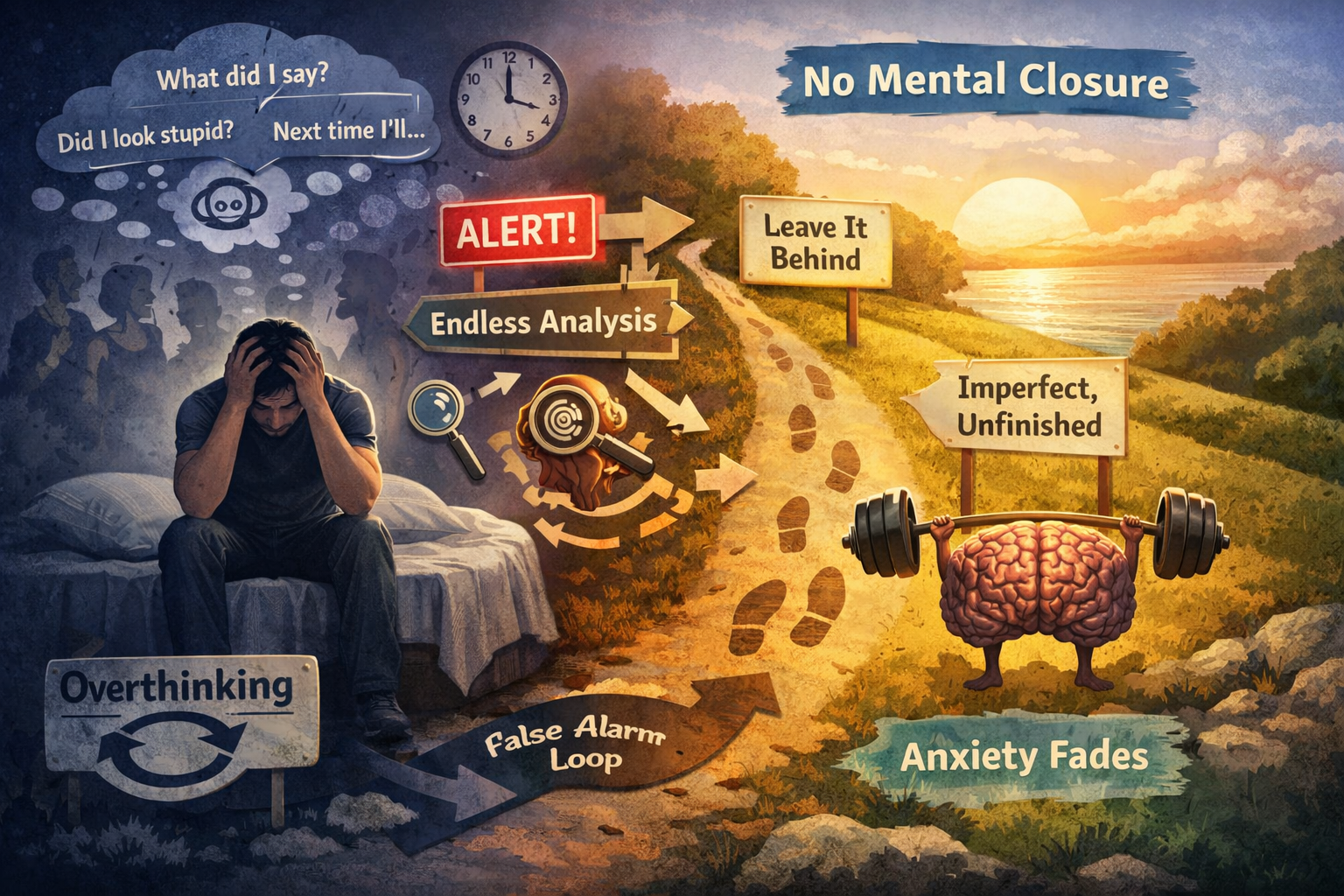
Why Ignoring What Happened Makes You Less Anxious and More Psychologically Stable

Psychological strength in anxiety is not built by analyzing social situations after they end. It is built by leaving them unfinished in your mind. This article explains why ignoring what happened—when nothing truly went wrong—reduces post-event rumination, weakens anxiety circuits, and creates real emotional stability.

Why Ignoring What Happened Makes You Less Anxious and More Psychologically Stable Read Post »

Shopping Cart
Scroll to Top