Emotional Regulation

The Hidden Engine of Anxiety: Shame and the Inner Critic

Anxiety isn’t just fear of the future, it’s often fear of your own inner voice. For high-functioning adults with GAD or social anxiety, self-criticism masquerades as logic and responsibility. But every internal attack activates the nervous system’s threat response. The more you try to “fix” yourself through shame, the more anxious you become. Real change begins when you separate from the inner critic and stop treating yourself as the enemy.

The Hidden Engine of Anxiety: Shame and the Inner Critic Read Post »

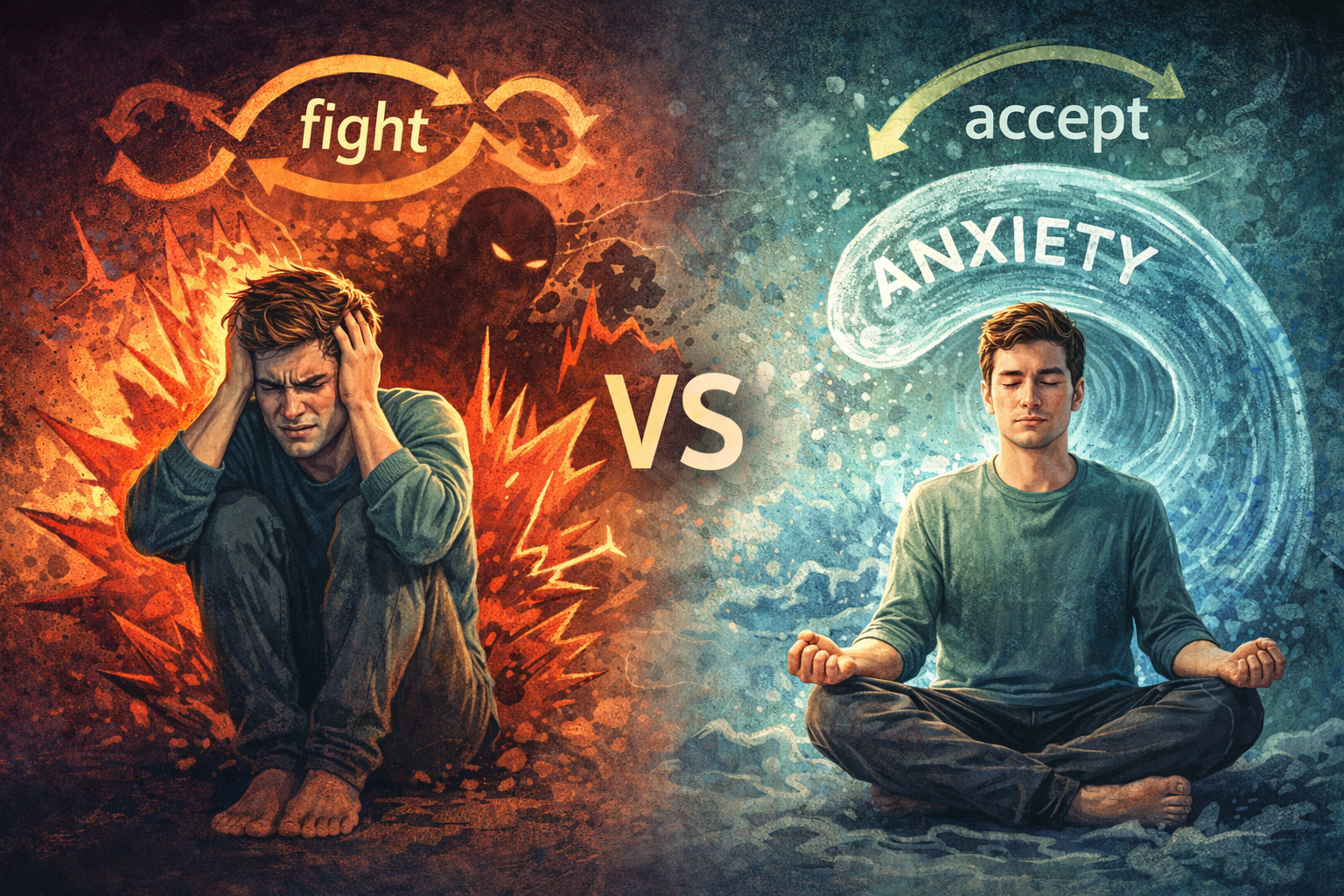
Acceptance Is Not Giving Up, It’s How Anxiety Loses Its Grip

Anxiety isn’t created by what happens to you, it’s created by how your mind reacts to it. You can’t control life, people, or circumstances, but you can control the meaning you assign to them. When you stop fighting reality and start accepting what already happened, the anxiety loop begins to weaken. Acceptance doesn’t erase pain, but it’s the first step toward breaking anxiety’s grip and starting the recovery journey.

Acceptance Is Not Giving Up, It’s How Anxiety Loses Its Grip Read Post »

Do Pets Help With Mental Health? What Science Says

Pets won’t cure anxiety, depression, PTSD, or bipolar disorder, but science suggests they can offer meaningful support. Research shows that interacting with animals may reduce stress hormones, increase oxytocin, and ease feelings of loneliness through routine, touch, and non-judgmental presence. At the same time, evidence is clear that these benefits are modest, highly individual, and never a substitute for therapy or medication. Understanding where pets genuinely help, and where they don’t, is key to separating comforting myths from scientific reality.

Do Pets Help With Mental Health? What Science Says Read Post »

When Positive Thinking Becomes a Psychological Problem

Positive thinking is often promoted as a universal cure for anxiety. Yet, psychological research shows that when positivity becomes rigid, forced, or used to escape discomfort, it can increase rumination, self-monitoring, and emotional distress. This article explains, scientifically and clearly, when positive thinking stops helping and starts becoming part of the problem.

When Positive Thinking Becomes a Psychological Problem Read Post »

Acknowledge – Hug – Forgive (AHF): A Simple Framework for Inner Child Healing Explained Through Psychology

Many people dismiss “inner child” work as unscientific, yet in psychology it points to something real: early emotional patterns shape how we interpret situations and experience anxiety later in life. The Acknowledge – Hug – Forgive (AHF) framework is not a formal technique, but a simple way to describe three research-backed processes, emotional awareness, emotional safety, and cognitive reappraisal, that help explain why unresolved emotional learning continues to drive anxiety and emotional reactivity.

Acknowledge – Hug – Forgive (AHF): A Simple Framework for Inner Child Healing Explained Through Psychology Read Post »

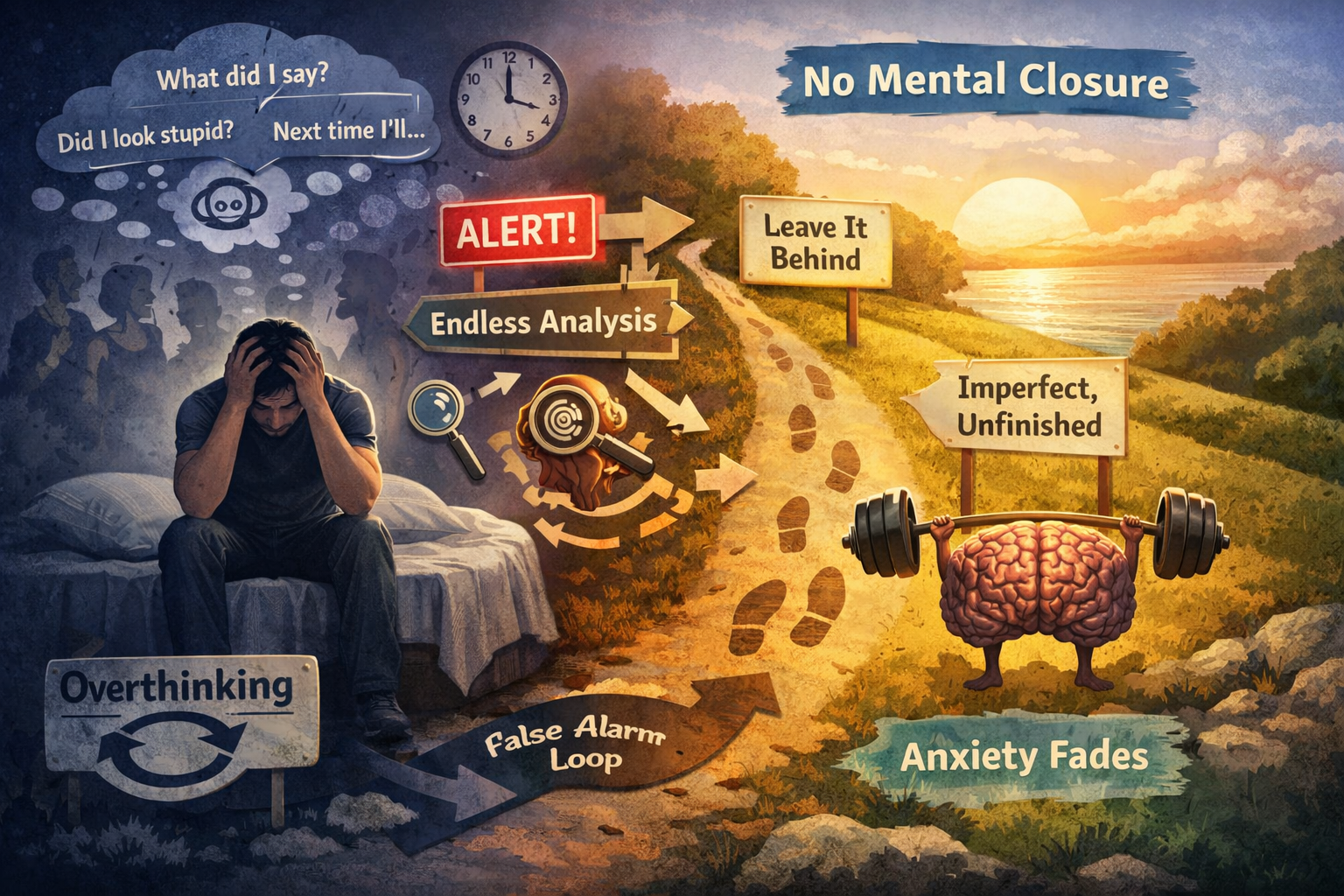
Why Ignoring What Happened Makes You Less Anxious and More Psychologically Stable

Psychological strength in anxiety is not built by analyzing social situations after they end. It is built by leaving them unfinished in your mind. This article explains why ignoring what happened—when nothing truly went wrong—reduces post-event rumination, weakens anxiety circuits, and creates real emotional stability.

Why Ignoring What Happened Makes You Less Anxious and More Psychologically Stable Read Post »

Shopping Cart
Scroll to Top