Understanding Anxiety

Why You Don’t Need to “Succeed” Socially to Recover from Anxiety

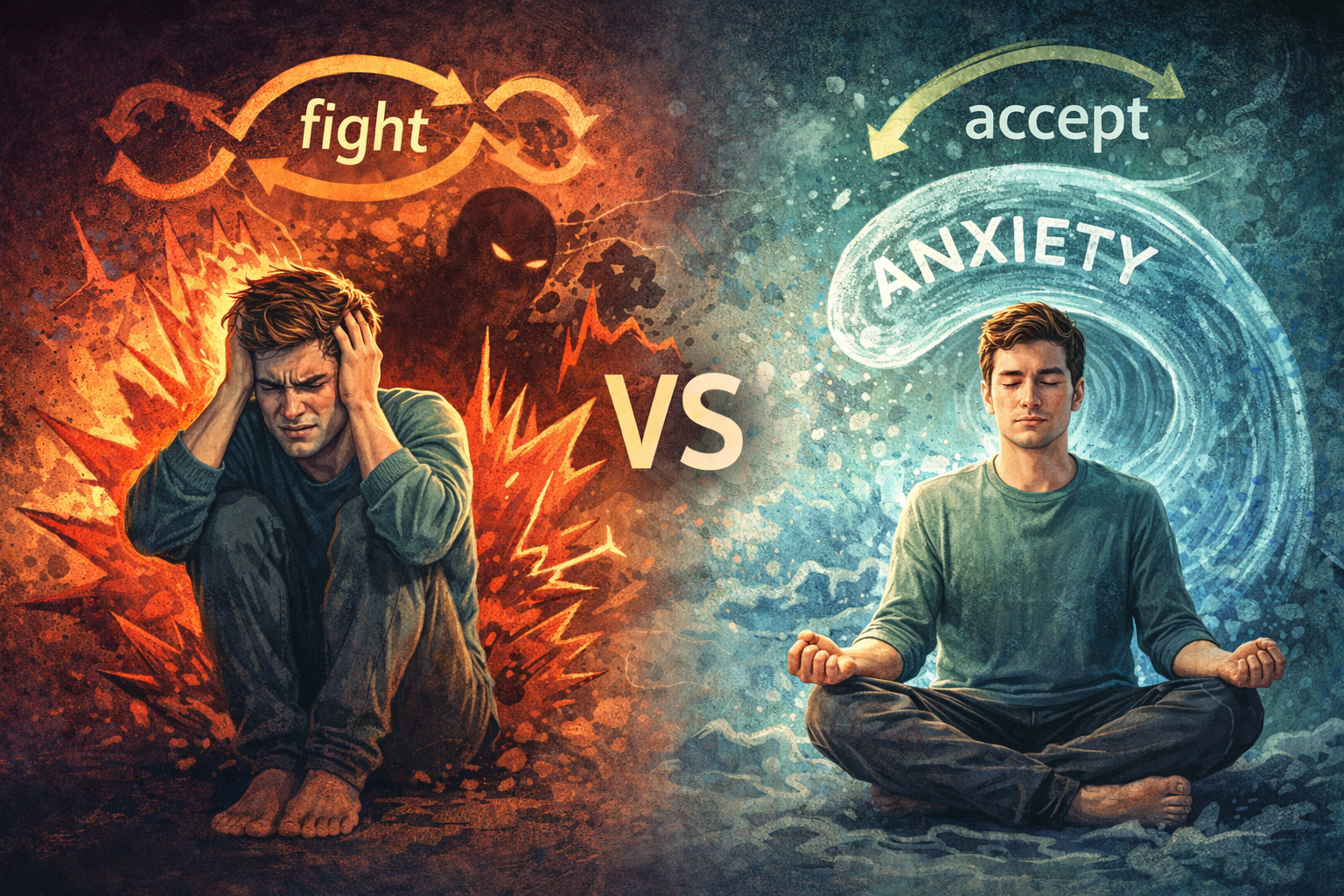
Recovery from social anxiety does not require confidence, flawless performance, or social success. It requires learning to stop fixing what did not harm you, allowing imperfection, and leaving social experiences without mental replay. This article explains, using CBT and neuroscience, why healing happens when you drop the need to “do well,” not when you master it.

Why You Don’t Need to “Succeed” Socially to Recover from Anxiety Read Post »

Why the More You Try to Be Better, the More Anxious You Become (Here’s Why)

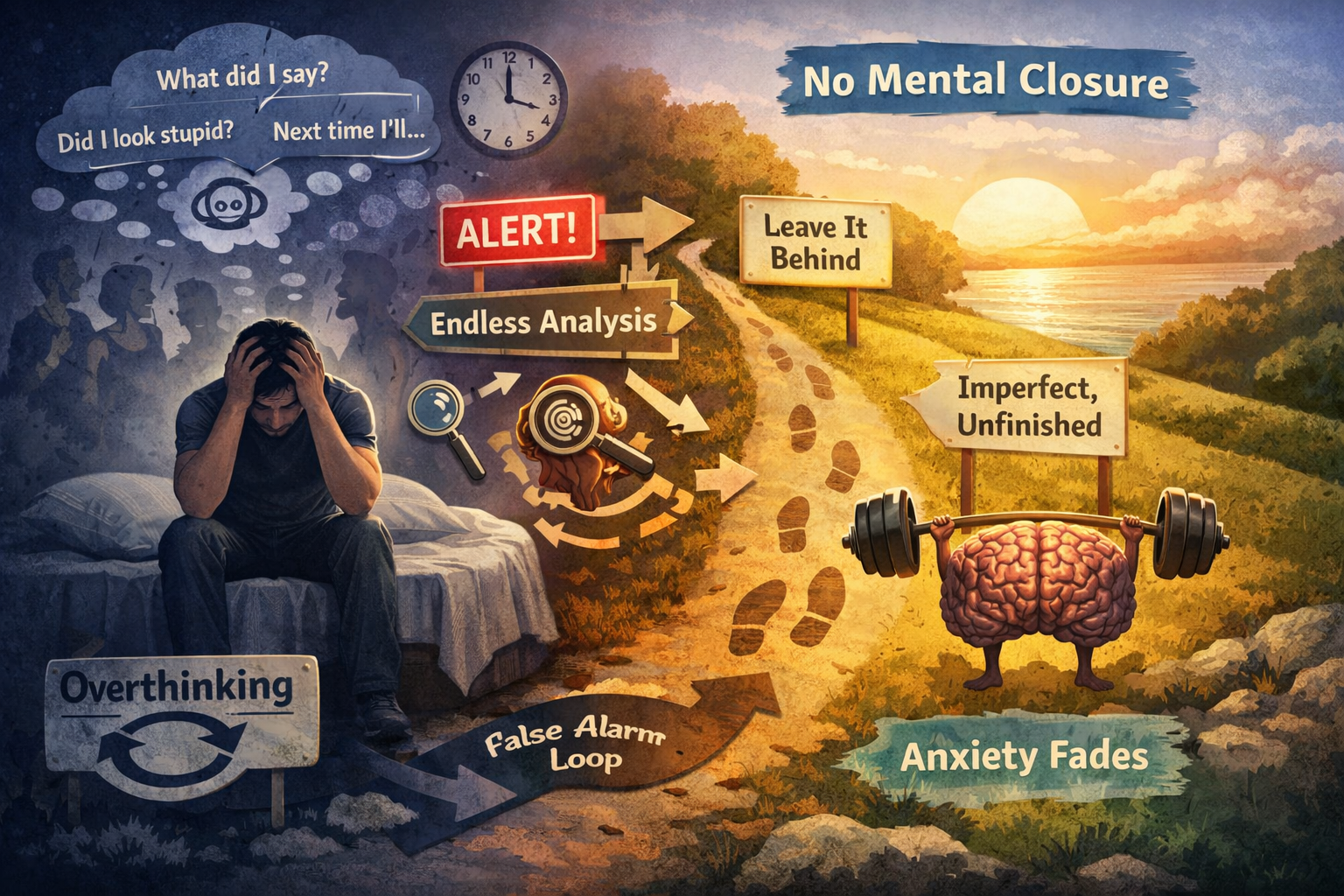
Trying to be “better” after social situations might feel like self-improvement, but for anxious minds, it often backfires. This article explains why post-event rumination, mental correction, and perfectionism maintain anxiety, and why learning to tolerate imperfection and let go of mental closure leads to real psychological resilience.

Why the More You Try to Be Better, the More Anxious You Become (Here’s Why) Read Post »

The Unseen Divide: Avoidance vs. Tolerance of Uncertainty in Social Anxiety, A Cognitive and Neurolearning Analysis

Not looking back when you hear laughter is often called avoidance—but that’s not always true. The same behavior can either reinforce social anxiety or weaken it, depending on what happens internally. This article explains why fear-driven non-checking strengthens threat learning, while indifference to ambiguity allows anxiety to fade. Same action. Opposite outcomes.

The Unseen Divide: Avoidance vs. Tolerance of Uncertainty in Social Anxiety, A Cognitive and Neurolearning Analysis Read Post »

Shopping Cart
Scroll to Top