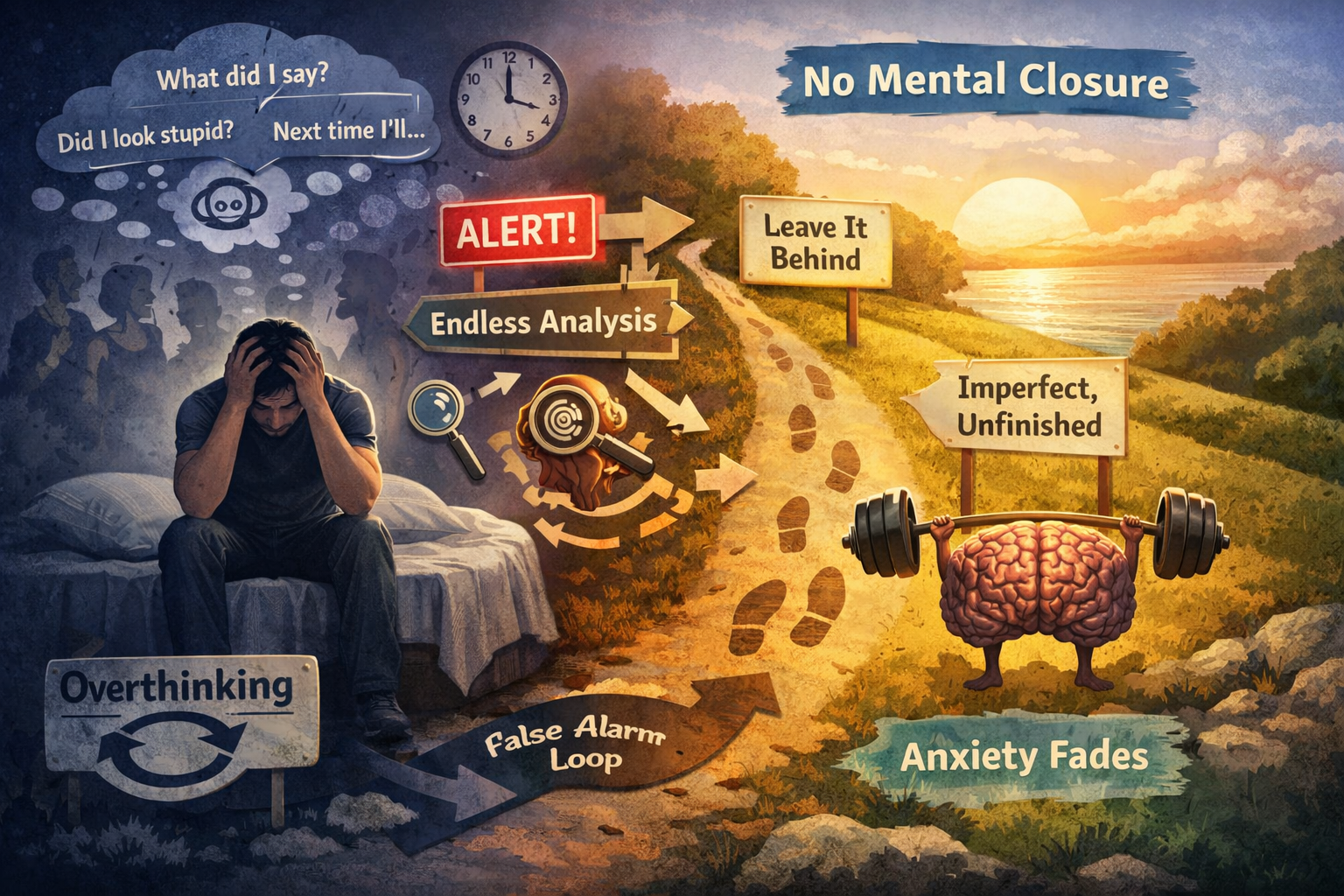

Anxiety is often misunderstood as a byproduct of poor reasoning, lack of perspective, or irrational thinking. However, decades of psychological research suggest a more complex reality: some of the most intelligent minds are among the most vulnerable to anxiety disorders. High cognitive ability, particularly verbal intelligence, abstract reasoning, and imaginative capacity, can paradoxically intensify, not buffer against, chronic anxiety.
This article explores how anxiety hijacks the very mechanisms that make intelligence adaptive, turning strengths like advanced pattern recognition and complex thinking into liabilities. Drawing on findings from cognitive behavioral therapy (CBT), metacognitive theory, and neuroscience, we explain why intelligent individuals may “know better” but still “feel worse.”
Intelligent Minds and Anxiety Loops: A Vulnerable Match
Intelligent individuals typically possess strong capabilities in:
- Pattern detection
- Abstract reasoning
- Verbal articulation
- Mental time travel (thinking about the past and future)
These abilities offer undeniable advantages in problem-solving and creativity. However, they also increase the likelihood of:
- Over-interpreting ambiguous cues as threats
- Simulating endless negative outcomes
- Ruminating in complex, self-referential verbal thought
- Developing maladaptive metacognitive beliefs (e.g., “Worrying helps me prepare”)
The brain’s default mode network, which activates during self-referential and future-oriented thinking, is often hyperactive in both highly intelligent individuals and those with anxiety disorders. This overlap suggests a neurocognitive pathway through which intelligence feeds into anxiety rather than protecting against it.
How Advanced Reasoning Amplifies Worry and Rumination
High reasoning ability allows for sophisticated internal simulations, but this same capacity enables more elaborate forms of worry and post-event processing.
Key Cognitive Mechanisms:
- Verbal mediation of worry: Anxious individuals tend to think in words, not images. Highly verbal thinkers are especially vulnerable to persistent verbal loops (“What if…” scenarios) that maintain anxiety.
- Cognitive fusion: When thoughts are taken as literal truths (“If I think something bad will happen, it must be likely”), reasoning can be misapplied to reinforce fear.
- Confirmation bias and threat reasoning: The analytic mind can selectively gather evidence to support pre-existing fears, making it harder to escape anxiety loops.
In essence, the smarter the thinker, the more intricate and persistent their worries may become, especially when those cognitive skills are co-opted by the threat detection system.
Imagination and Counterfactual Thinking: Fuel for Chronic Anxiety
The ability to simulate alternative realities is a hallmark of human intelligence. Yet in anxiety, this becomes a curse:
- Counterfactual thinking (“What if I had done it differently?”) fuels regret and self-doubt.
- Threat simulation allows individuals to vividly imagine catastrophes that never happen but feel real.
- Prospective anxiety (fear of future outcomes) becomes more vivid and emotionally resonant due to the richness of internal imagery.
This cognitive tendency is linked to increased activation of the amygdala, especially when simulations are threatening, and insufficient downregulation by the prefrontal cortex, which is otherwise responsible for emotional regulation.
Insight ≠ Emotional Regulation
Many anxious high-IQ individuals are acutely aware of their own mental patterns. They may:
- Accurately label their symptoms
- Recognize irrational thoughts
- Understand the underlying psychology of anxiety
Yet this meta-awareness does not translate into relief. Why?
- Metacognitive beliefs may reinforce anxiety (“I need to be on guard”).
- Over-analysis can inhibit emotional processing.
- Self-monitoring increases distress rather than reducing it.
This explains the common paradox of “knowing better but not feeling better”, an idea well-documented in CBT research.
The CBT Perspective: Knowing Isn’t Enough
Cognitive Behavioral Therapy (CBT) recognizes that insight alone is insufficient. According to Adrian Wells’ metacognitive model, anxiety persists due to the positive and negative beliefs about worry itself:
- “Worrying helps me stay prepared” (positive belief)
- “My worry is uncontrollable and dangerous” (negative belief)
The more intelligent the individual, the more logically they may argue for the usefulness of worry, despite evidence to the contrary.
Further, Borkovec’s work on verbal worry shows that abstract, language-based thinking reduces emotional processing of fear, thereby maintaining physiological arousal and mental preoccupation.
CBT therefore focuses on modifying how one thinks, not just what one knows. It targets unhelpful mental habits, not the intelligence behind them.
Recovery: Retraining Cognitive Habits, Not Reducing Intelligence
Importantly, intelligence is not the problem, it’s the way cognitive resources are recruited by the brain’s threat detection system.
Recovery does not involve:
- Lowering intelligence
- Suppressing imagination
- Avoiding analysis
Instead, it requires:
- De-centering from thoughts (recognizing thoughts as mental events, not facts)
- Shifting attention (training the mind away from internal simulations)
- Relearning cognitive flexibility (responding differently to uncertainty)
The goal is to uncouple intelligence from fear-based cognition so that imagination and reasoning can serve adaptive, not anxious, purposes.
Conclusion: Intelligence Is a Neutral Tool, Not a Shield or a Curse
High intelligence offers no guaranteed protection from anxiety, and in fact, may fuel its most persistent forms through over-analysis, verbal rumination, and threat simulation. Yet intelligence itself is not to blame. Rather, it is how this capacity is shaped by metacognitive beliefs, emotional learning, and neural systems like the amygdala and prefrontal cortex.
Understanding this distinction helps reframe anxiety not as a failure of intellect, but as a misuse of it under threat. With proper awareness and retraining, intelligence can be reoriented toward problem-solving and growth, not worry.
References:
- Borkovec, T. D., & Inz, J. (1990). The nature of worry in generalized anxiety disorder: A predominance of thought activity. Behaviour Research and Therapy, 28(2), 153–158.
- Wells, A. (2009). Metacognitive Therapy for Anxiety and Depression. Guilford Press.
- Hirsch, C. R., & Mathews, A. (2012). A cognitive model of pathological worry. Behaviour Research and Therapy, 50(10), 636–646.
- Clark, D. A., & Beck, A. T. (2012). The Anxiety and Worry Workbook: The Cognitive Behavioral Solution. Guilford Press.
- McEvoy, P. M., & Brans, S. (2013). Common versus specific factors in the cognitive behavioral treatment of emotional disorders: A meta-analytic review. Clinical Psychology Review, 33(3), 328–341.