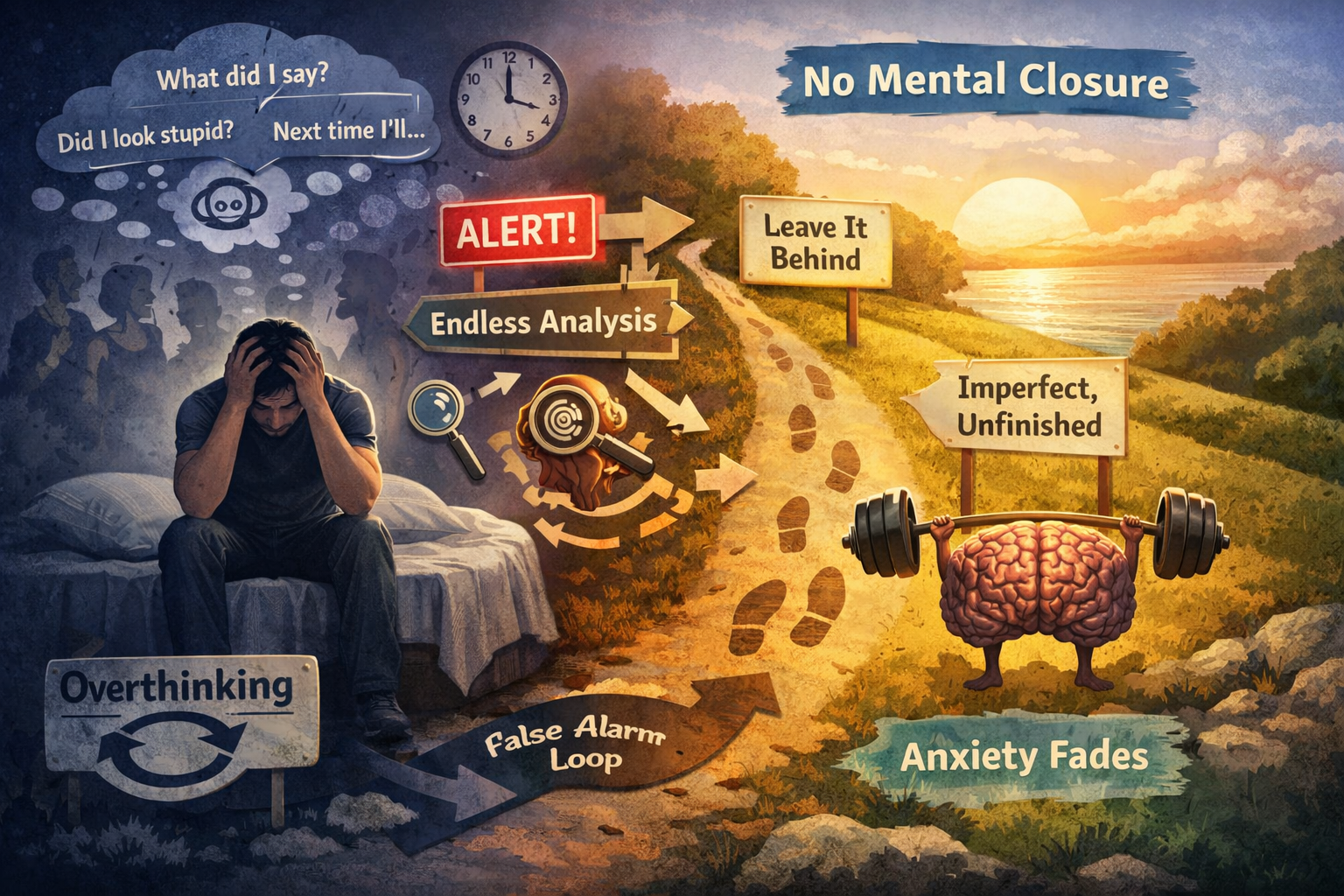

Introduction: The Burden of Psychological Overreach
One of the most quietly corrosive psychological habits is the tendency to assume responsibility for how others feel, think, or react to us. This habit, often invisible to the person caught in it, underlies many forms of chronic anxiety, people-pleasing, rumination, and self-suppression. Yet from the standpoint of cognitive psychology, CBT (Cognitive Behavioral Therapy), and social neuroscience, this assumption is both unfounded and maladaptive.
We are responsible for our values, behaviors, and integrity, not for other people’s subjective interpretations, emotional reactions, or social narratives. Understanding why this distinction matters requires diving into how the brain miscalculates threat and responsibility in social contexts.
Part I: The Distinction Between Responsibility and Overreach
Personal Responsibility Includes:
- Your behavior and words
- Your intentions and boundaries
- How you manage your emotional reactions
- Whether your actions align with your values
Psychological Overreach Involves:
- Worrying about what others might think
- Trying to prevent others from feeling upset
- Constantly managing others’ perceptions
- Over-monitoring your speech and behavior for fear of “being wrong”
The shift from responsibility to overreach often feels subtle, but it’s the psychological equivalent of trying to control the weather. It leads to exhaustion, resentment, and a deep disconnection from one’s authentic self.
Part II: Why the Brain Over-Identifies With Others’ Minds
1. Mind-Reading and Social Prediction Errors
In cognitive psychology, mind-reading is a well-documented cognitive distortion where one assumes they know what another person is thinking. For example: “They’re probably mad at me,” or “She must think I’m selfish.”
But the brain is terrible at accurately reading minds. Most people project their own fears into ambiguous social data, interpreting silence or a look as judgment or rejection.
CBT highlights how assumptions without evidence fuel emotional distress, particularly in social anxiety.
2. Hyperactive Social Threat Detection
Social neuroscience has shown that individuals with social anxiety exhibit heightened activity in the amygdala, the brain’s threat detection center. In particular, they:
- Overestimate the likelihood of negative evaluation
- Assume neutral faces are hostile
- Ruminate on perceived social errors
This is not a moral failing, it’s a brain pattern evolved to keep us included in groups. But in modern life, this overactive vigilance backfires, producing chronic stress and emotional overregulation.
Part III: The Mechanisms Behind Psychological Misresponsibility
A. Inflated Responsibility
This term, studied extensively in anxiety disorders, describes the mistaken belief that:
- You are the cause of others’ emotions
- You are to blame if someone is uncomfortable
- You must act to prevent others from experiencing distress
This belief structure is common in OCD, GAD, and social anxiety, and it leads to compulsive behaviors like over-apologizing, avoidance, or people-pleasing.
B. Emotional Contagion
Humans are emotionally contagious by nature. Seeing someone sad or angry can trigger parallel emotions in us. But:
- Feeling what others feel does not mean you caused it
- Empathic resonance is not equal to responsibility
Boundaries are needed not to disconnect from others, but to remember: what I feel in response to your emotion is mine; what you feel is yours.
C. Rumination and Self-Monitoring
Over-monitoring your behavior (“Did I say the wrong thing?” “Should I clarify that text?”) is cognitively expensive. Studies show it:
- Drains working memory
- Increases anxiety over time
- Inhibits authentic self-expression
This hypervigilance stems from the belief that you must avoid “causing” a negative social response. But you don’t control others’ filters, traumas, or interpretations.
Part IV: The Fallacy of Control and the Reality of Subjectivity
Why You Can’t Control How Others See You:
- Perception is filtered through personal history: What triggers one person may soothe another.
- Emotions are internally generated: You may be a stimulus, but the response is shaped by the other person’s beliefs, needs, and unresolved issues.
- Narratives are privately authored: You may intend kindness, but others may interpret your action through lenses of insecurity, distrust, or past betrayal.
This is not cynicism, it is neuroscience.
Trying to manage others’ reactions is like programming a device you don’t own, with software you’ve never seen, using a manual written in a language you don’t speak.
Part V: The Psychological Cost of Trying to Manage Others’ Minds
Attempting to control how others feel about you creates:
- Hypervigilance: Constant scanning for social threat
- Self-censorship: Suppression of thoughts, feelings, and creativity
- Burnout: From endless emotional labor that is not your job
- Identity distortion: You become who others expect, not who you are
Conclusion: Psychological Freedom Is Found in Ownership, Not Control
The deeper truth is this:
Every person owns their own mind.
Your job is not to edit your soul for someone else’s comfort. Your role is to act from your values, speak with integrity, and let others respond however they will.
You cannot be responsible for someone else’s interpretation of your honesty. You cannot live your life waiting for universal permission or eternal reassurance. Others’ emotional responses may affect you, but they do not belong to you.
Psychological Freedom Means:
- Letting go of the illusion of control
- Trusting others to manage their own inner world
- Reclaiming your attention, time, and energy from fruitless self-monitoring
- Acting in accordance with your values, not their possible reactions
By stepping out of others’ emotional landscapes and back into your own, you restore agency. That is not selfish. It is sanity.